


[ad_1]
fFor greater than two years, COVID-19 has taken maintain with mankind. However people usually are not the one victims of the virus. The illness, which main theories nonetheless counsel crossed from animals to people at a wholesale seafood market in Wuhan, China, has now contaminated pets and animals from farms, laboratories and zoos. It has additionally discovered its means into the wild, infecting many non-domesticated species.
In keeping with a current examine revealed within the journal, COVID-19 now seems to be widespread all through the animal kingdom scientific information which offers the primary international case depend of COVID-19 circumstances in animals. However there’s excellent news: Different analysis has discovered that the extremely infectious Omicron variant and its many subvariants could hit animals much less laborious than they do us – they’re much less simply transmitted between them and trigger much less extreme illness.
“To my information, there isn’t a obvious improve within the reporting of SARS-CoV-2 in animals following the emergence of BA.5,” says Amélie Desvars-Larrive, assistant professor on the College of Veterinary Medication, Vienna in Austria and co-author of the scientific information to be taught. “Nonetheless, the character of lively surveillance and monitoring of animals that [has been] carried out is essential. We should always not suppose ‘human first’, however combine information of animals, people and their shared atmosphere and develop a holistic method to monitoring and combating SARS-CoV-2.”
Within the examine, researchers compiled reported incidents of COVID-19 by analyzing two animal well being databases: the Rising Illness Surveillance Program, a reporting system of the Worldwide Society for Infectious Illnesses; and the World Animal Well being Info System, to which veterinarians, conservationists and different researchers report diagnoses of COVID-19 in nonhumans. From February 2020 to June 2022 there have been 704 SARS-CoV-2 “animal occasions” – outlined as a single case or a number of associated circumstances inside a selected group, herd or different animal inhabitants – throughout 26 completely different species. The outbreaks have occurred in 39 international locations throughout 5 continents, with Australia and Antarctica reporting no circumstances. As for the entire variety of sick animals that represents? Solely 2,058.
However that small quantity has a huge impact. Most reviews solely give the variety of animals that examined constructive, not the proportion they characterize of a complete variety of animals examined, so it’s not doable to inform what share of an animal inhabitants is harboring the virus.
“Clearly we’re solely seeing the tip of the iceberg,” says Desvars-Larrive, as a result of animals are far much less examined for SARS-CoV-2 than people. “It’s inconceivable to reply what number of animals are literally contaminated, however SARS-CoV-2 is a generalized coronavirus. Its adaptability to new hosts is spectacular.”
Proceed studying: That is the part of the pandemic when life is getting again to regular
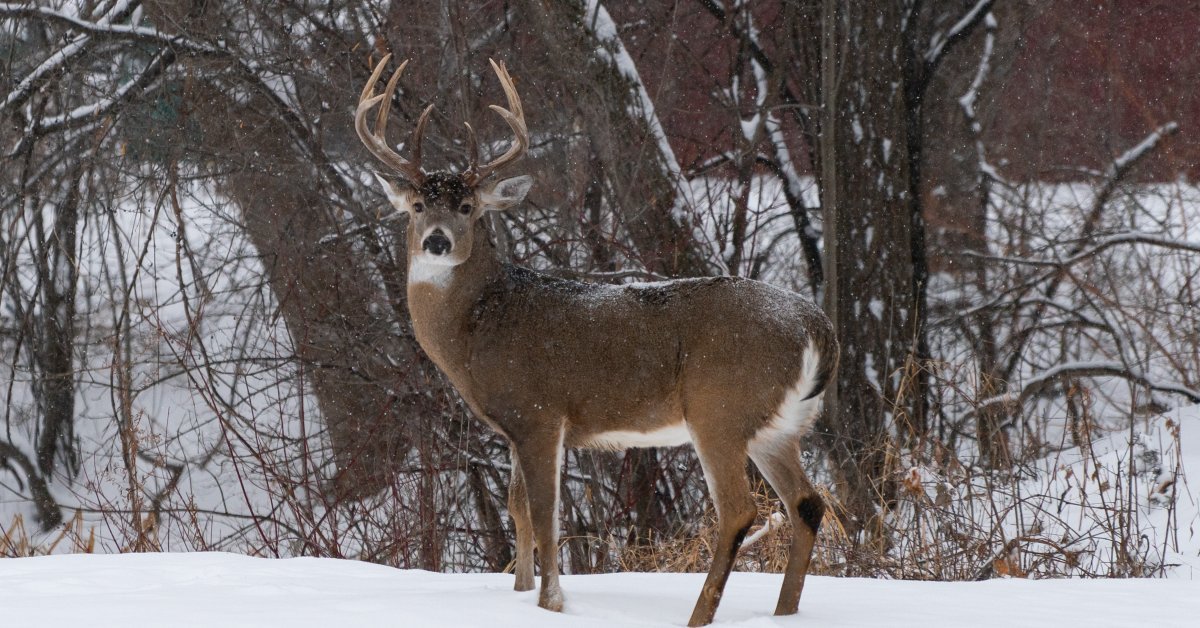
Of all of the species studied, the American mink leads the pack with 787 reported circumstances and the white-tailed deer with 467 circumstances. To be truthful, that is partly on account of pattern bias, says Desvars-Larrive. Mink have been extensively examined as they’re bred on densely populated farms. (In November 2020, the Danish authorities ordered 12 million mink killed on farms because the virus started to unfold within the species.) Deer, in the meantime, stay near people and are hunted for his or her meat, offering samples for COVID-19 be taken from one thing that’s in our personal curiosity. Subsequent on the record are home cats with 338 circumstances and home canine with 208 circumstances. Under are lions (68), tigers (62), and western lowland gorillas (23). The record ends with numerous different animals, together with the black-tailed marmoset, Canada lynx, ring-tailed coati, and large anteater, with one case every.
Different animal species that did not make the record both have not been examined or could have pure immunity — or a minimum of resistance — to SARS-CoV-2. “Some animal species are extra inclined to coronaviruses,” says Desvars-Larrive. “This can be associated to molecular mechanisms for virus entry or to some genetic mutations within the host.”
A query raised however not answered by the examine is how animals are affected by Omicron and its subvariants, together with BA.5, that are so extremely transmissible to people.
Nonetheless, a handful of different research addressing this query have been carried out or are at present underway, and so they present that animals are resisting the brand new strains effectively. Earlier than the appearance of the Omicron variant and its quite a few subvariants, researchers at Texas A&M College studied an infection charges in canine and cats dwelling in households the place a minimum of one individual examined constructive for COVID-19. In a pattern group of 600 animals, they discovered 100 infections – or 16% of the entire examined – believed to have been transmitted from people to pets. A few of the constructive circumstances had been symptomatic, with the animal coughing, sneezing, vomiting, or behaving lethargically; others had been asymptomatic.
A second part of the examine is now underway because the emergence of Omicron and BA.5 and though solely 100 animals have been examined to date, the distinction in outcomes is placing. “As a result of Omicron and its subvariants are the dominant strains in people, we have solely had two constructive animal infections to date,” says veterinary epidemiologist Sarah Hamer, who led the examine. “So it is positively a decrease an infection prevalence now.”
Hamer stresses that the outcomes are preliminary and researchers want to check many extra animals earlier than the second part of analysis is full — and he or she would not have a definitive reply as to why animal an infection charges may be decrease within the Omicron and BA period .5. “Might or not it’s that there is one thing about this virus that does not infect animals as a lot?” she asks. “Might or not it’s that SARS-CoV-2 has been round for some time and these animals have developed an immune response? We do not know but, however hopefully the neutralizing antibody check we’re doing now will assist fill in these gaps.”
Proceed studying: Why we nonetheless do not have a Pi variant – even after a lot Omicron
Equally, different research present that Omicron tends to trigger much less extreme signs in animals than earlier variants, and researchers have supplied some theories as to why. In a examine revealed in Nature in January 2022, researchers discovered that the Omicron variant was much less pathogenic than earlier strains of SARS-CoV-2 in laboratory mice and hamsters, and contaminated animals misplaced much less weight and fewer virus of their higher and decrease airways housed tracts. The researchers could not pinpoint precisely what makes omicron much less virulent in rodents, however did put ahead some theories: With greater than 30 mutations distinguishing the brand new variant from the unique, the virus’s spike protein would possibly work together much less successfully with cell receptors within the animals . It is also doable that modifications in different proteins decelerate viral replication in rodents, or that the variant would not replicate as successfully at rodent physique temperature because it does at human temperature. A examine revealed in Nature in Might yielded related outcomes with the BA.2 variant. This time, the researchers additionally observed a lowered inflammatory response within the animals’ lungs.
One other examine revealed as a preprint in April bioRxiv, carried out analyzes of 28 cats, 50 canine and one rabbit dwelling in households with people contaminated with Omicron and located that simply over 10% of the animals reacted positively to the virus and none confirmed medical signs. Lidia Sánchez-Morales, a veterinarian on the College of Madrid and lead creator of the examine, hypothesized what would possibly defend the animals.
“Quite a few research have proven that animals are much less delicate to SARS-CoV-2 an infection than people, which can be on account of a decrease affinity between the cell receptor and the binding viral receptor,” she wrote in an e-mail. Specifically, the ACE2 receptor in human cells, to which the virus binds, is discovered to a lesser extent in animals, and Omicron could also be much less efficient at overcoming this hurdle than the unique virus. “For that reason, we conclude that the pets’ susceptibility to this variant seems to be a lot decrease than the opposite variants of concern recognized thus far.”
However the hazard stays. The seemingly countless mutability of SARS-CoV-2 signifies that new variants are positive to emerge. Desvars-Larrive worries that animals might function a sort of laboratory for the virus to check out new variants earlier than these novel strains unfold to people.
“The introduction and additional unfold of SARS-CoV-2 in an animal inhabitants might result in the creation of an animal reservoir that may proceed to maintain, unfold and drive the emergence of recent variants,” she says. “That is of specific concern for species which are considerable, stay in social teams, and have shut interactions with people.”
This reality, argues Desvars-Larrive, requires far more aggressive testing of untamed, captive, and domesticated animals. “Energetic surveillance and monitoring of animals is essential,” she says. “That is the one means we are able to get extra information and higher perceive the epidemiology of SARS-CoV-2, not solely in animals but additionally on the human-animal interface.”
That is the place our self-interest comes into play. We frequently do what the animals catch. Taking good care of them is likely one of the most necessary steps in caring for ourselves.
Extra must-read tales from TIME
[ad_2]


Discussion about this post