


[ad_1]
A The brand new federal regulation requiring sesame to be listed as an allergen on meals labels has an unintended consequence — growing the variety of merchandise containing the ingredient.
Meals trade specialists say the necessities are so stringent that many producers, significantly bakers, are discovering it simpler and cheaper so as to add sesame to a product — and label it — than attempt to maintain it away from different meals or home equipment containing sesame.
Because of this, a number of firms — together with nationwide restaurant chains like Olive Backyard, Wendy’s and Chick-fil-A, in addition to breadmakers that inventory grocery cabinets and serve colleges — are including sesame seeds to merchandise that did not exist earlier than. Though the follow is authorized, customers and advocates say it goes in opposition to the spirit of the regulation, which goals to make meals safer for individuals with allergic reactions.
“It was actually thrilling, as a politician and as a mom, to get these labels,” mentioned Naomi Seiler, a guide with the Bronchial asthma and Allergy Basis of America, whose 9-year-old daughter Zoe is allergic to sesame. “As a substitute, firms deliberately add the allergen to meals.”
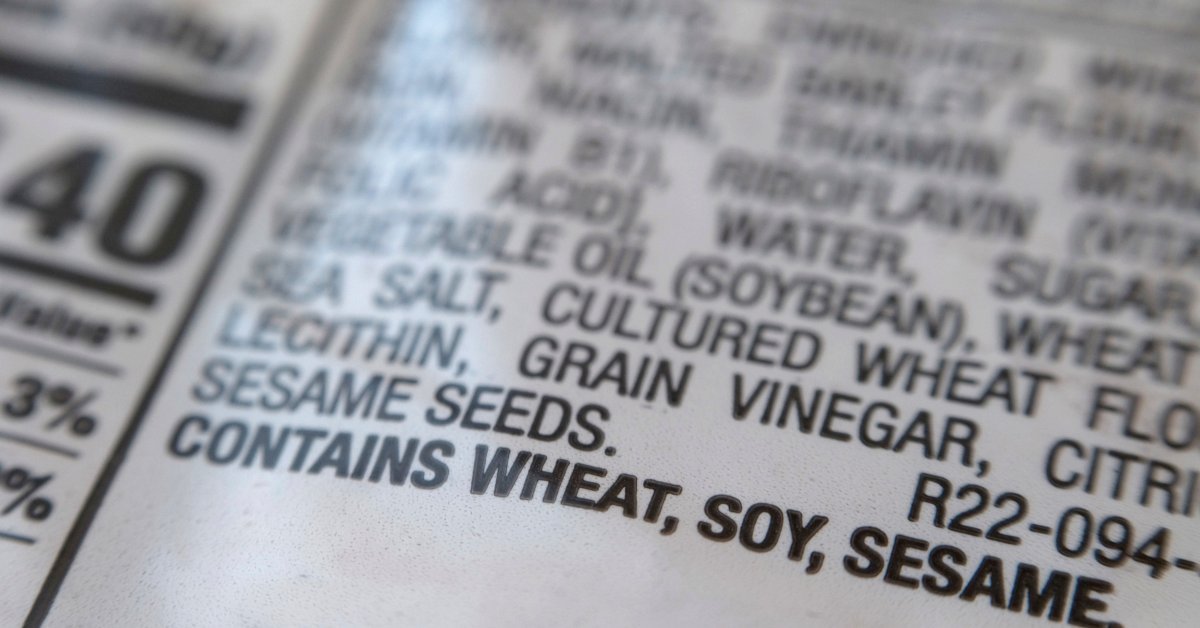
The brand new regulation, which takes impact on January 1, requires all meals manufactured and offered within the US to be labeled in the event that they include sesame, which is now the nation’s ninth most vital allergen. Sesame might be present in apparent locations, like sesame seeds on hamburger buns. However it’s additionally an ingredient in lots of meals, from protein bars to ice cream, added to sauces, dips and salad dressings, and hidden in spices and flavorings.
Advocates of households managing allergic reactions have campaigned for years for sesame to be included on the record of main allergens. Congress in 2004 created labeling necessities for eight: milk, eggs, fish, shellfish, tree nuts, peanuts, wheat and soybeans.
Greater than 1.6 million individuals within the US are allergic to sesame, some so extreme that they require injections of epinephrine, a drug used to deal with life-threatening reactions. Circumstances of sesame allergic reactions have risen in recent times together with a rising variety of meals containing the ingredient, Dr. Ruchi Gupta, pediatrician and director of the Heart for Meals Allergy and Bronchial asthma Analysis at Northwestern College.
“Sesame is in so many issues that individuals do not actually perceive,” mentioned Gupta, who referred to as the transfer so as to add sesame to merchandise “so disappointing.”
“It is actually difficult in households which have sesame allergic reactions,” she mentioned.
Beneath the brand new regulation being enforced by the Meals and Drug Administration, firms should now explicitly label sesame as an ingredient or individually state {that a} product accommodates sesame. Within the US, components are listed on product packaging so as of amount. Sesame labeling has been required somewhere else for years, together with Canada, Europe, Australia and New Zealand.
If the components don’t include sesame, firms should take measures to forestall the meals from coming into contact with sesame, often called cross-contamination.
Meals trade specialists mentioned the brand new necessities are neither easy nor sensible.
“It is like we abruptly requested the bakers to go to the seashore and clear up all of the sand,” mentioned Nathan Mirdamadi, a guide with Industrial Meals Sanitation, which advises the trade on meals questions of safety.
Some firms embody claims on labels {that a} meals might “include” a sure product or that the meals was “manufactured in a facility” that additionally makes use of sure allergens. Nevertheless, based on the FDA, such declarations are voluntary, not required, and don’t relieve the corporate of cross-contamination prevention necessities.
As a substitute, some firms have taken a distinct strategy. Olive Backyard officers mentioned that beginning this week, the chain is including “a minimal quantity of sesame flour” to the corporate’s well-known breadsticks “on account of the potential of cross-contamination on the bakery.”
Chick-fil-A has added sesame to its white buns and multigrain brioche buns, whereas Wendy’s mentioned the corporate has added sesame to its French toast sticks and buns.
The USA Bakery, which operates Franz Household Bakeries in California and the Northwest, instructed prospects in March it might add a small quantity of sesame flour to all hamburger and scorching canine buns and buns “to cut back the danger of unintended effects.” to chop down on sesame merchandise.”
Whereas such actions don’t violate the regulation, the FDA doesn’t “assist” them, the company mentioned in a press release.
“It might make it tougher for patrons with sesame allergic reactions to search out meals which can be secure for them,” the assertion mentioned.
Some massive firms have beforehand added different allergens to their merchandise and up to date their labels. In 2016, Kellogg’s added traces of peanut flour to some cookies and crackers, prompting protests.
That is irritating and scary for fogeys like Kristy Fitzgerald of Crookston, Minnesota. She realized final spring that Pan-O-Gold Baking Co., which provides bread to varsities, well being facilities and grocery shops within the Midwest, added small quantities of sesame seeds to its merchandise, together with these served at her daughter’s college. Six-year-old Audrey has now outgrown her sesame allergy.
Bob Huebner, Pan-O-Gold’s meals security/high quality assurance supervisor, instructed Fitzgerald in a collection of emails that the corporate was compelled so as to add sesame seeds to the product and label.
“The unlucky actuality is that our gear and bakeries should not arrange for allergen cleansing that might be required to forestall sesame cross-contamination and was not an choice for us,” Huebner wrote in an electronic mail to Fitzgerald. Huebner responded to an electronic mail from the AP however didn’t reply to questions in regards to the firm’s practices.
Fitzgerald began a web based petition to protest the transfer so as to add sesame seeds.
“Sometime somebody will feed sesame to an allergic baby,” Fitzgerald mentioned. “I feel the legal guidelines must be modified to indicate that this isn’t an appropriate follow.”
Extra must-reads from TIME
[ad_2]


Discussion about this post