


[ad_1]
HFolks favor their climate to be in a type of Goldilocks zone – a not too scorching, not too chilly temperature window that influences not solely our bodily well-being but in addition our temper. Throughout warmth waves or freezes, tempers flare, persistence ebbs, and habits can endure. Nicely, a brand new research in The Lancet Planetary Well being, has discovered that this is applicable not solely to our face-to-face interactions, but in addition on-line. When temperatures rise or fall above or under a consolation zone of 54ºF to 70ºF (12ºC to 21ºC), hate speech on-line within the US – not less than on Twitter – will increase accordingly.
The analysis crew, led by Leonie Wenz, working group chief on the Potsdam Institute for Local weather Affect Analysis (PIK), delved deep into the net language to reach at its conclusions and began by analyzing greater than four billion geolocated tweets posted in the usA., over a six-year interval from Could 2014 to Could 2020. They programmed a man-made intelligence algorithm to scan the tweets for hate speech, which they outlined in accordance with United Nations requirements as any communication containing “derogatory or assaults or makes use of discriminatory language”. in relation to any individual or group on the idea of … their faith, ethnicity, nationwide origin, race, color, ancestry, gender or another identifier.”
This can be a broad definition and the algorithm may generally get confused by it. Whereas the researchers have been capable of practice this system to acknowledge hateful phrases and phrases, some have a number of meanings. Particularly, the software program needed to study the that means of the N-word. For instance, a variant of the phrase ending in “-a” has been “reused in some communities as a type of endearment,” the authors write. On this case, they taught the software program to search for surrounding phrases that have been “aggressive or derogatory.”
Proceed studying: Summers get unbearably scorching earlier than they even begin
Total, simply over 75 million tweets – or 2% of the entire of four billion over the six-year window – analyzed by the algorithm have been labeled as hate speech. However when precisely the tweets occurred and the place they got here from can differ broadly. The research positioned the supply of the hate speech tweets in 773 completely different US cities and in contrast that info to the temperature in these places on the time the tweet was posted
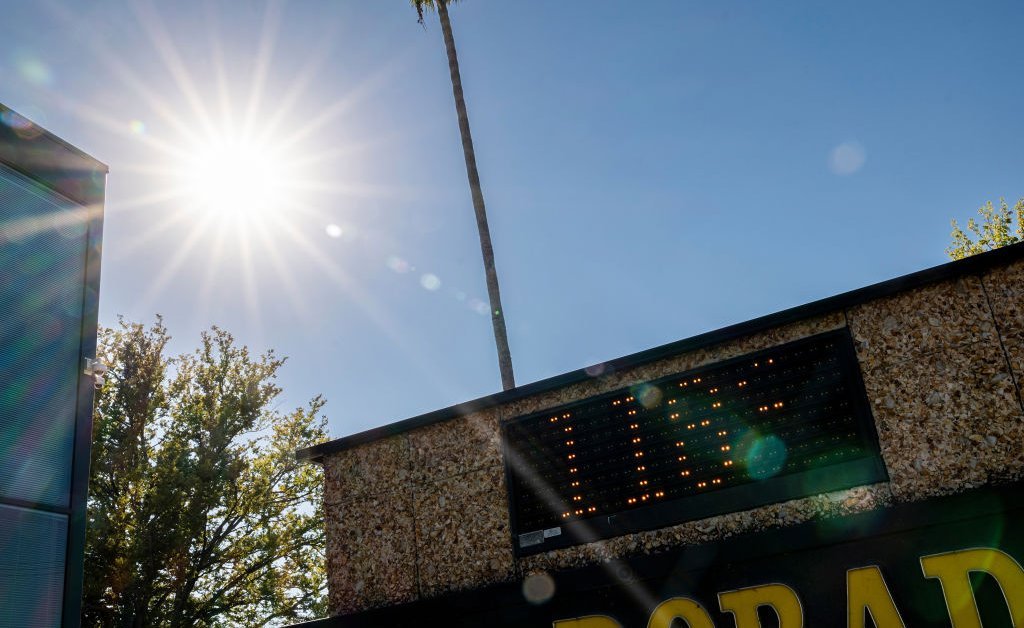
Generally, the research didn’t discover that any metropolis or area produced extra hate tweets than another; The important variable they discovered was all concerning the thermometer. The fewest hate tweets occurred in a slender 6-degree temperature vary of 59°F to 65°F (15°C to 18°C) throughout the recognized broader consolation zone. Exterior of that 54ºF to 70ºF candy spot, issues can differ wildly. For instance, on extraordinarily chilly days – extra widespread within the northern plains than wherever else within the nation – when temperatures hovered between -6°C and -3°C, hate tweets elevated by 12.5%. On extraordinarily scorching days – particularly within the desert southwest – when the utmost temperatures have been between 42 and 45 °C, hate tweets elevated by 22%.
“Even in high-income areas the place folks can afford air-con and different heat-reduction choices, we see a rise in hate speech on extraordinarily scorching days,” says Anders Levermann, head of complexity science at PIK and co-author of the research, in a press release , which accompanies its launch. “There are seemingly limits to adaptation to temperature extremes, and these are decrease than these set by our sheer physiological limits.”
That does not imply we do not adapt in any respect. The research categorized the 773 cities from which the tweets originated into 5 distinct local weather zones: chilly, hot-dry, mixed-humid, hot-humid, and marine (or near-shore). Broadly talking, they discovered that the rise in hate tweets diversified, with, for instance, folks within the chilly area — which coated many of the northern portion of the 48 contiguous states — exhibiting much less extreme on-line misbehavior throughout an excessive chilly snap than Folks within the scorching and humid area who wouldn’t be used to sudden dips within the temperature.
“This may occasionally point out that the rise in hate tweets relies on the temperatures we’re used to,” the authors write.
Proceed studying: How psychology will help struggle local weather change — and local weather anxiousness
Limitations within the research didn’t enable the researchers to make use of geographic info to carve out variations in weather-related hate tweets primarily based on socioeconomic standing, creed, race, political social gathering membership, or extra. “Grouping by revenue, faith and social gathering [affiliation] aren’t excellent, as cities are by no means completely homogeneous,” they wrote; Nevertheless, their geolocated knowledge didn’t management these components.
Whereas pinpointing precisely which demographics have been doing hate tweets might have been tough, pinpointing the targets wasn’t tough. The research cites current analysis exhibiting that 25% of Blacks and 10% of Hispanics have skilled racial harassment on-line. These communities are additionally among the many most weak to the results of maximum climate circumstances, that are being exacerbated by local weather change. The research discovered that members of the LGBTQ neighborhood are additionally 4 occasions extra prone to report on-line harassment than others. The identical teams, the authors warn, are probably to endure from all hate tweets, together with temperature-related tweets — and it poses a risk to their well-being.
“Being the goal of on-line hate speech is a critical risk to folks’s psychological well being,” mentioned Annika Stechemesser, a doctoral pupil at PIK and a co-author of the research, in a press release. “The psychological literature tells us that on-line hate can exacerbate psychological sickness, particularly for younger folks and marginalized teams.”
This risk will solely improve, the authors warn, as human-caused local weather change worsens and excessive temperature extremes turn out to be extra frequent. “Assuming low adaptation and comparable communication patterns,” they write, “this might imply that hatred expressed on-line may improve beneath future world warming.” Hate is a uniquely human trait, and local weather change is one in all our most deplorable works. Collectively they make a really evil couple.
Extra must-read tales from TIME
[ad_2]


Discussion about this post