


[ad_1]
WWith one other potential COVID-19 surge, specialists are turning their consideration to 2 rising variants: BQ.1 and BQ.1.1.
Each BQ.1 and BQ.1.1 are descended from BA.5, an Omicron subvariant that at present accounts for about 68% of US COVID-19 circumstances. Nevertheless, BA.5’s kinfolk are shortly gaining floor. BQ.1 and BQ.1.1 every accounted for five.7% of recent COVID-19 circumstances in america within the week ended October 15, in keeping with knowledge from the US Facilities for Illness Management and Prevention (CDC). Mixed, that is about 11% of recent circumstances throughout the nation. In New York and New Jersey, the general share was nearer to 20%. A number of weeks in the past, these variants barely confirmed up on the CDC’s tracker, suggesting they’ll unfold shortly.
Of the 2, BQ.1.1 is extra regarding, says Dr. Eric Topol, founding father of the Scripps Analysis Translational Institute and an in depth observer of COVID-19 analysis. Each have numerous mutations in comparison with BA.5, however BQ.1.1 is “simply filled with disruptive mutations” that “may pose a risk to our immune system’s response,” says Topol.
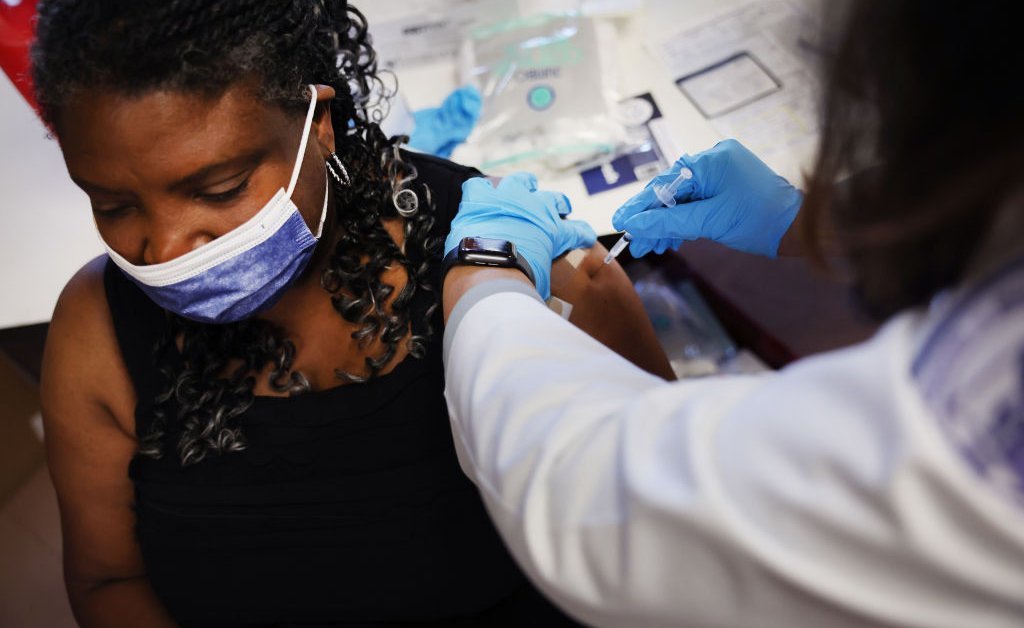
If there’s excellent news about BQ.1 and BQ.1.1, it’s associated to vaccination. The brand new Omicron-specific boosters had been designed to focus on BA.four and BA.5, and preliminary analysis suggests they elicit an efficient immune response. Since BQ.1 and BQ.1.1 are each associated to BA.5, the brand new photographs will “virtually definitely” supply some cross-protection, stated White Home medical adviser Dr. Anthony Fauci, to CBS Information. That is another excuse to cost up, which reportedly lower than 10% of eligible Individuals have carried out so up to now.
It is too early to inform precisely how the bivalent boosters will work in opposition to newer strains like these, however Topol encourages anybody who’s eligible to get one. “It is the most effective factor you are able to do proper now to guard your self in opposition to these new variants,” says Topol. “Simply hold your immune system as primed and prepared as potential.”
Extra analysis is required on BQ.1 and BQ.1.1, however a research posted on-line in October (not but peer-reviewed) warned that “present herd immunity boosts and BA.5 vaccines could not present broad sufficient safety from an infection” because the virus continues to evolve. The researchers discovered that BQ.1.1 is ready to evade antibodies from earlier BA.5 infections, suggesting it could additionally be capable to bypass vaccine safety. The research additionally discovered that monoclonal antibody medication — together with Evusheld, which is used to guard individuals with compromised immune programs and does not reply effectively to COVID-19 vaccines — are much less efficient in opposition to BQ.1.1 in comparison with earlier strains of the virus. The US Meals and Drug Administration additionally not too long ago warned healthcare suppliers that Evusheld could not neutralize all variants of SARS-CoV-2.
Whereas vaccines and boosters are at present the most effective instruments we now have to fight COVID-19, the emergence of BQ variants is additional proof that they don’t seem to be sufficient to completely shield individuals from illness. If an evasive variant like BQ.1 or BQ.1.1 turns into widespread this winter and a few traces of protection are much less efficient, different precautions like protecting and avoiding crowded indoor areas could also be mandatory to guard in opposition to an infection.
Extra must-read tales from TIME
[ad_2]


Discussion about this post