


[ad_1]
LLife in a metropolis generally appears like residing sooner or later. City residing can imply publicity to new applied sciences and concepts – and generally a preview of the temperatures to return in close by areas. In Europe, cities are on common 1.5°C (2.7°F) hotter than surrounding areas throughout sizzling spells, in line with a examine printed in January 31 lancet. This quantity could sound small, however scientists have additionally recognized it because the rise above pre-industrial temperatures that humanity should maintain onto for the most effective local weather change situation.
These so-called city warmth islands might be lethal, particularly as warmth waves turn out to be extra frequent in densely populated locations around the globe. In the summertime of 2022, city areas throughout Europe recorded report highs and 26 US cities recorded their hottest seasons ever. The result’s a public well being disaster for cities not designed to resist excessive warmth. “London could possibly be as sizzling as Barcelona in 20 years if we’re not cautious, and Barcelona could possibly be like Marrakech,” says Mark Nieuwenhuijsen, co-author of the examine and director of city planning, atmosphere and well being on the Barcelona Institute for International Well being .
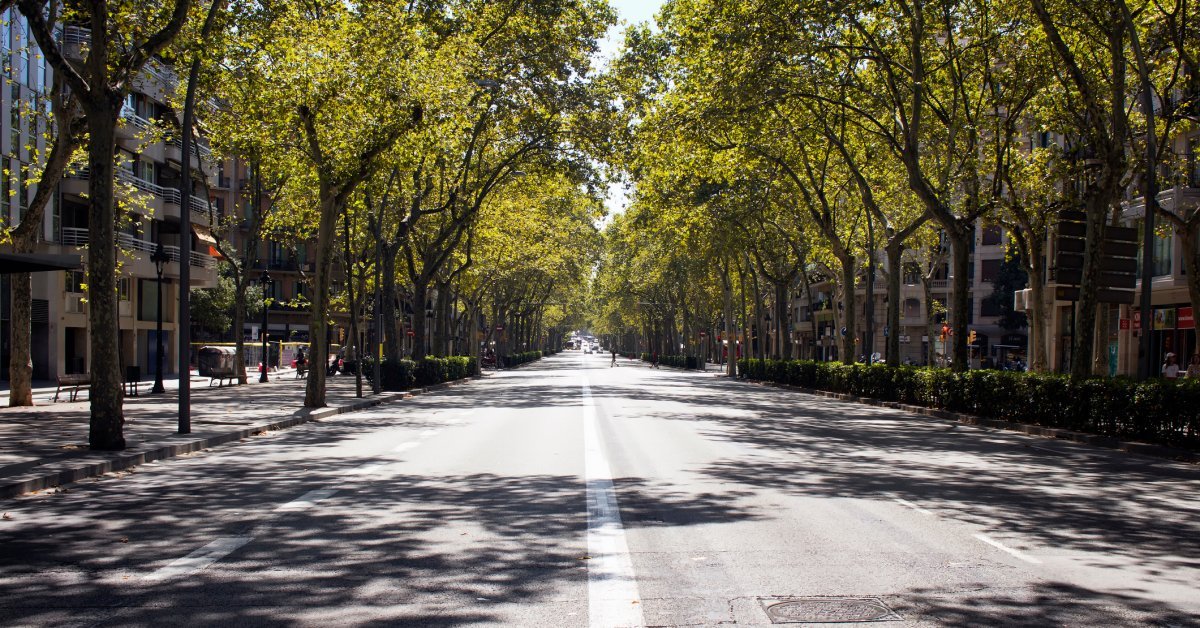
Cities really want to chill out, and whereas including air con is extra more likely to contribute to world warming than repair it, the examine fashions a extra sustainable method. The paper, which incorporates knowledge from 93 European cities, discovered that in 2015 greater than 4% of summer season deaths in these cities had been as a result of results of city warmth islands. Nevertheless, when the researchers adjusted the mannequin to replicate a hypothetical, a lot greener Europe – with 30% of city areas surrounded by bushes – the variety of heat-related deaths fell by greater than a 3rd.
Modeling cities which can be 30% shaded by bushes isn’t any coincidence; It’s a actual purpose that many European cities are working in direction of and a few, like Oslo, have already achieved. However with a present common protection of 14.9%, many cities in hotter areas – for instance Break up, Croatia (5.4%); Paris (9%); and Lisbon (3.6%) – nonetheless have some option to go. (For comparability, within the US, New York Metropolis’s tree cowl was 22% in 2017.)
Proceed studying: Cow burps have a significant impression on the local weather. Fixing that is more durable than you suppose
Timber present extra cooling companies than simply shade. Leaves are filled with water, and when it will get sizzling exterior, that water evaporates and bubbles up into the nice and cozy air, making a cooling impact not not like a microscopic mist. Then there are the much less measurable results of extra tree cowl in an space. “The place there are bushes, there aren’t any roads,” says Nieuwenhuijsen, and with out asphalt each centimeter counts. The asphalt downside is multifaceted, he explains. Apart from absorbing each ounce of daylight within the day and step by step releasing its warmth, typically kidnapping the in any other case cooler night time air, asphalt means vehicles. About 60% of the power launched by fossil gasoline vehicles is within the type of warmth.
“If asphalt is an indicator of extra vehicles, bushes on the whole are an indicator of a extra livable space,” provides Nieuwenhuijsen. In Barcelona, which has a thriving bus system, just one in 4 public transport journeys is made by automobile, although exactly these automobiles cowl 60% of the town’s space.
For some cities initially designed for vehicles — simply 12.4% of Phoenix, Arizona, was coated by bushes when a greening challenge started in 2010 — reaching 30% tree cowl might imply a elementary redesign of sure city areas and the way individuals transfer round them . “Having extra bushes in city areas makes them extra thermally comfy and safer. However I might add that it is also essential that we use the precise forms of bushes and place them in the precise locations to maximise impression,” says Robert Brown, a professor of panorama structure and concrete planning at Texas A&M College not concerned within the examine concerned. Timber in city areas are at larger danger of dying within the first few years after planting, and with tight native budgets there’s a case for prioritizing species that may simply thrive within the neighborhoods the place they’re wanted most.
Warmth is the main weather-related killer, however dying is just probably the most excessive measure of the well being results elevated temperatures can convey. Warmth may take a toll on psychological well being, partially via potential disruption to sleep. Tree cowl wouldn’t solely preserve extra individuals alive, argues Nieuwenhuijsen — it might make that life higher each day.
Cities on a price range also needs to take into consideration taking good care of the inexperienced areas they have already got, says Nieuwenhuijsen. And extra greenery would not all the time need to imply a lush new 10-block park. The connection between tree cowl and preventable deaths proven within the examine is linear, which means each little bit helps.
Extra must-reads from TIME
[ad_2]


Discussion about this post