


[ad_1]
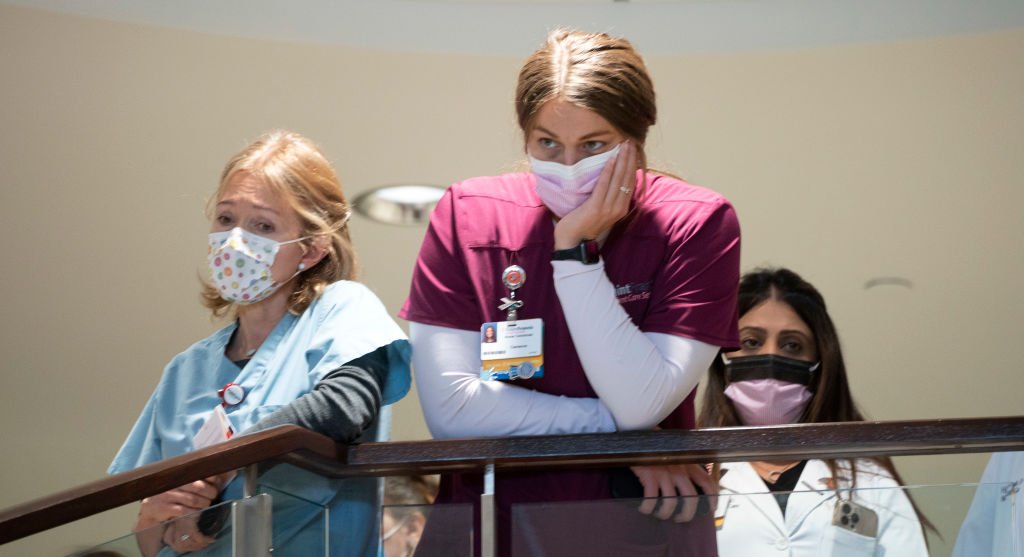
LOna DeNisco has misplaced monitor of the violent incidents which have transpired over the roughly 20 years that she has labored as an emergency room nurse in Buffalo, New York. “Not a shift goes by the place a nurse is not punched, kicked, slapped and their hair pulled. It occurs daily,” she says. “I used to be overwhelmed, taken to the bottom.” She can also be sure that the rising violence within the Buffalo group is spreading to her hospital, Erie County Medical Middle. Latest shootings — most not too long ago the mass capturing that killed 10 folks at a neighborhood comfort retailer in Buffalo on Could 14 and at a medical facility in Tulsa, Oklahoma on June 1, which killed 4 folks, together with two medical doctors and one Receptionist – are painful reminders that violence might threaten her life or the lives of her sufferers at any second and that it appears as much as her to maintain them protected.
“We prepare for mass casualties, we prepare for energetic shooters, however none of that basically prepares you,” says DeNisco. “We might do workout routines all day, proper? That doesn’t imply [much] when I’ve a gun to my face.”
The Tulsa capturing is an excessive instance of a rising pattern: violence towards medical doctors, nurses and different healthcare employees. In keeping with knowledge from the Bureau of Labor Statistics, well being and social care employees are 5 occasions extra doubtless than different employees to be injured by office violence, and the variety of such accidents has elevated dramatically over the previous decade – from 6, four incidents per 10,000 employees yearly in 2011 to 10.three per 10,000 in 2020. Healthcare employees say scenario has worsened throughout COVID-19 pandemic; In September, almost a 3rd of respondents to a Nationwide Nurses United survey mentioned they’d seen a rise in office violence.
Partially, that is most likely as a result of the pandemic has made folks so skinny and left them much less power for well mannered dealings. No matter their political celebration, tensions are excessive as a result of many individuals are fed up with the countless partisan back-and-forth on COVID-19, says Gordon Gillespie, a registered nurse who’s a professor on the College of Cincinnati researching violence towards healthcare employees. Many healthcare employees are weary with countless worries — about private protecting gear, the chance of getting sick, or having to fill the hole for sick colleagues. “Everyone seems to be simply drained and their resilience is down. So if one thing occurs, you are extra more likely to escalate even sooner,” says Gillespie.
The pandemic has exacerbated lots of the underlying issues that result in violence and uncovered deep gaps in America’s social security web and well being care system. And much more so than earlier than the pandemic, medical doctors and nurses — and emergency rooms specifically — are grappling with the fallout. For instance, psychological well being issues that had been inadequately addressed earlier than the disaster worsened for many individuals through the pandemic, reducing folks off from help programs in lots of circumstances and rising every day stress. The change is seen to Murnita Bennett, a psychiatric nurse and colleague of DeNisco’s, who says a part of the rise in violence she’s witnessed is because of sufferers not receiving the care they want.
“These sufferers who’re violent are put proper again into the group. We hold violent offenders within the hospital longer as an alternative of sending them to the state hospital the place they might get extra assist. It is horrifying,” says Bennett. “I speak to the sufferers and their households on a regular basis, however I all the time do [thinking], the place is my escape route? What’s my physique language—[making sure] that I present no aggressiveness…. In case you see what occurred in Tulsa, we all know that at any second somebody might are available in and hurt us.”
Racism in the neighborhood, which discovered its most horrifyingly seen kind within the grocery store bloodbath during which a gunman aiming at black folks killed 10, has additionally contributed to an more and more tense environment on the hospital, Bennett says. Within the a long time she’s labored as a nurse, she’s been the “solely black face within the room” many occasions, partly as a result of discriminatory hiring practices at hospitals. “I do not assume I might have been there this lengthy if I hadn’t fought,” says Bennett. “I fought quite a lot of battles in that hospital.” Bennett says the grocery retailer capturing was significantly scary for her as a result of her mom lives in the identical neighborhood and he or she’s been feeling extra nervous outdoors of the group lately. “I am all the time white folks and I am like, ‘Who is that this man? Whose truck is that this? I see folks otherwise,” she says.
Whilst healthcare employees face larger challenges through the pandemic, they’ve much less help. Understaffing is rampant within the US healthcare system, partly as a result of sufferers have been sicker and want extra attentive care through the COVID-19 disaster. Consequently, sufferers don’t all the time obtain the care they need as shortly as anticipated, which might create battle. Meg Dionne, an emergency room nurse at Maine Medical Middle in Portland, says that after a affected person hit her this January whereas she was 26 weeks pregnant, she took an in depth have a look at her personal habits. If she hadn’t been so busy, might she have stored him quiet? “Once you’re being pulled in 40 completely different instructions, you are failing to fulfill the wants of those folks, who’re frightened and harm and change into extra susceptible to violence if they do not get sufficient care in a well timed method,” says Dionne.
A life with such a excessive threat of violence is clearly unsustainable in the long term. Gordon argues that educating well being employees on violence is essential and making it more durable for folks with violent intent to get into hospitals – which he admits is a problem given hospitals are designed to welcome folks and never lock down . Dionne, Bennett and DeNisco all say they’re sick of hospitals responding to violence as an alternative of averting issues. The important thing, Dionne says, lies in new laws — just like the federal Office Violence Prevention Act for well being and social companies employees, which might, amongst different issues, require businesses to develop violence prevention plans — which she says would make hospitals extra responsive the protection considerations of caregivers. Nonetheless, Bennett and DeNisco argue that the violence will not cease spreading to hospitals till it is contained of their group — which partly, they are saying, should contain curbing gun violence and selling gun security. “Till folks begin to perceive how fragile life is, we’re not going to vary that,” DeNisco says.
Extra must-read tales from TIME
[ad_2]


Discussion about this post